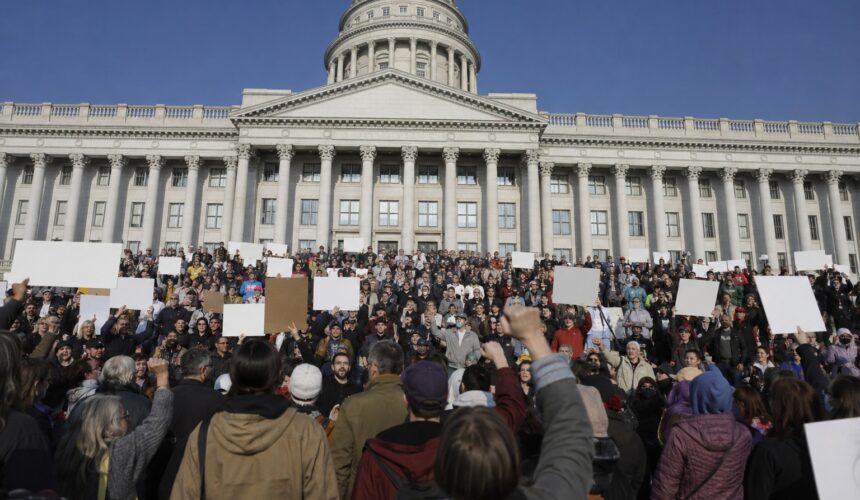
Hundreds of Utahns climbed the steps of the State Capitol in Salt Lake City this week with one demand: stop a massive data center before it is built. More than 600 people rallied against a proposed 40,000-acre campus planned for Box Elder County, along the fragile north shore of the Great Salt Lake, warning that the project could pull precious water from a lake that is already in steep decline.
What the Project Is
The development, known as the Stratos Project, is one of the largest data center proposals the state has ever seen. Backed by Canadian entrepreneur and Shark Tank investor Kevin O’Leary, the campus would sprawl across tens of thousands of acres of northern Utah and house the kind of energy-hungry computing infrastructure now driving the artificial intelligence boom across the country.
Supporters frame it as a once-in-a-generation economic engine. They argue it would bring jobs, tax revenue, and high-tech investment to a rural corner of the state, putting Box Elder County on the national map. For a region that has long watched opportunity flow to bigger cities, the promise of a major technology anchor is not nothing.
Why Utahns Are Alarmed
To the crowd that packed the Capitol, the project represents something far more alarming: a giant straw aimed at a lake that is already shrinking. The Great Salt Lake has hit record-low levels in recent years, exposing miles of dry lakebed and raising fears of toxic dust storms that could affect the health of millions of people along the Wasatch Front.
Critics warn that a facility of this scale could tax an already strained water supply, reduce the flow feeding into the lake, raise local temperatures, and worsen air quality in a region fighting a long-running drought. Data centers consume enormous amounts of water and electricity, much of it for cooling the servers that run around the clock. To opponents, the math is simple and stark: a lake in decline cannot afford to give more away.
A Wave of Opposition
The backlash has been overwhelming. Nearly 4,000 Utahns filed formal protests with the state over the project’s request for water rights tied to a tributary of the Great Salt Lake. That flood of opposition appears to have had an immediate effect: the water rights application connected to the project was withdrawn.
But protesters say the fight is far from over. Many point to a county-level approval they describe as rushed and opaque, arguing that residents were given too little time and too little information before officials gave the project a green light. The rally at the Capitol was, in part, a message to state leaders that the public is watching and that the issue will not quietly fade.
What This Means for Americans
The standoff in Utah is becoming a flashpoint in a much larger national debate. As the AI industry races to build ever-larger data centers, communities from Virginia to Arizona are confronting the same question: how much water, land, and power should a single facility be allowed to consume? The infrastructure that powers everyday apps and chatbots has to live somewhere, and increasingly that somewhere is rural land near limited natural resources.
For Utahns, the stakes are local and immediate. For the rest of the country, the outcome could become a template. If a grassroots movement can stall a project backed by a celebrity investor and embraced by local officials, it may embolden similar fights elsewhere. If the project moves forward anyway, it could signal that the demand for computing power will keep winning these battles. Here is what happened, and Utah’s answer could echo far beyond the Great Salt Lake.
Stay informed on the stories that matter most. Follow Here’s What Happened on Facebook and bookmark hereswhathappened.news for breaking news and analysis.