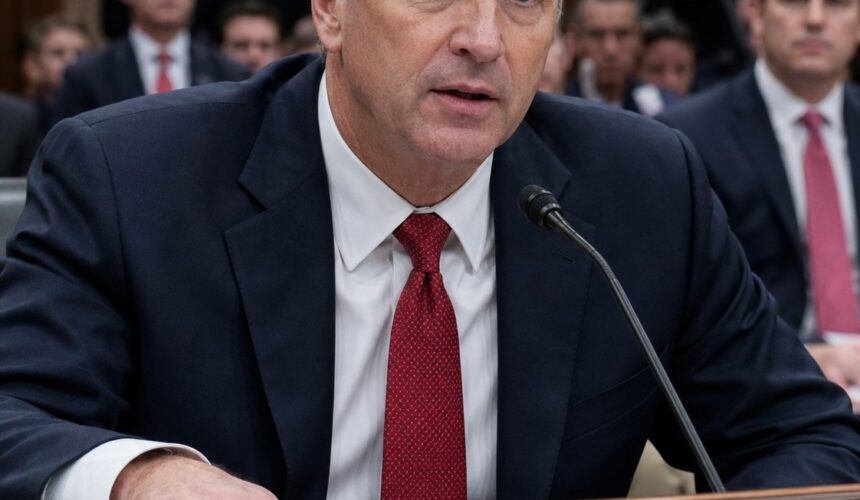
The Justice Department has officially abandoned one of the most contentious financial proposals of the Trump administration. Acting Attorney General Todd Blanche told a House Appropriations subcommittee this week that the government will not move forward with its planned “anti-weaponization fund.” His message left no room for interpretation: “We are not moving forward with the fund, period.”
What the Fund Was Supposed to Be
The proposed fund carried a price tag of roughly $1.776 billion, a figure that immediately drew scrutiny from lawmakers on both sides of the aisle. Its origins were unusual. The money traced back to a settlement connected to a $10 billion lawsuit that President Trump filed over the leak of his tax returns, a legal fight that put the federal government and the president on opposite sides of the courtroom.
The administration framed the fund as a remedy for people who believed the federal government had been weaponized against them. In theory, it would have set aside money for individuals who claimed they were unfairly targeted by federal agencies. In practice, critics argued, the structure left far too much room for the money to flow toward political allies rather than genuine victims of government overreach.
Bipartisan Resistance
Opposition to the fund did not break cleanly along party lines. Democratic lawmakers were the loudest critics, branding it a “slush fund” that could funnel taxpayer dollars toward Trump supporters with little oversight. They warned that a pool of nearly $1.8 billion, tied to a lawsuit the president himself filed, created an obvious conflict of interest.
But the discomfort was not limited to the left. Several Republicans were openly reluctant to throw their weight behind the proposal. Some questioned the optics of the arrangement, while others worried about the precedent of creating a large discretionary fund rooted in a settlement involving the sitting president. That hesitation left the program without a reliable base of support in either party.
The Courts Step In
The pressure did not stay confined to Capitol Hill. On May 29, U.S. District Judge Leonie Brinkema issued a temporary injunction that froze the fund while the court weighed the legal questions surrounding it. The order halted the program before any money could move, effectively putting the entire plan on hold.
Days later, Blanche made the freeze permanent in everything but name. By telling Congress the administration would not proceed “period,” he closed the door on a proposal that had already been blocked by the judiciary and battered by criticism from lawmakers. What began as a settlement-driven initiative ended as a political and legal dead end.
Two Competing Narratives
Supporters of the fund argued it was always about accountability. In their view, the federal government has at times overstepped its authority, and a dedicated fund could have offered a path to compensation for people genuinely harmed by that overreach. They saw the proposal as a recognition that abuses can happen and that those affected deserve a remedy.
Opponents saw something very different: a blank check waiting to be cashed. To them, the fund risked becoming a tool for rewarding political loyalty rather than righting real wrongs. With the program now off the table, both sides are left to argue over what might have been, and the broader debate over how the government should handle claims of weaponization is far from settled.
What This Means for Americans
For ordinary taxpayers, the decision means nearly $1.8 billion will not be committed to a program that critics across the political spectrum viewed with suspicion. It also underscores how checks and balances can work in practice, with Congress and the courts both playing a role in stopping a proposal before the money moved. Whether you saw the fund as a safeguard or a giveaway, its collapse is a reminder that big-dollar government initiatives rarely survive without broad support.
Stay informed on the stories that matter most. Follow Here’s What Happened on Facebook and bookmark hereswhathappened.news for breaking news and analysis.