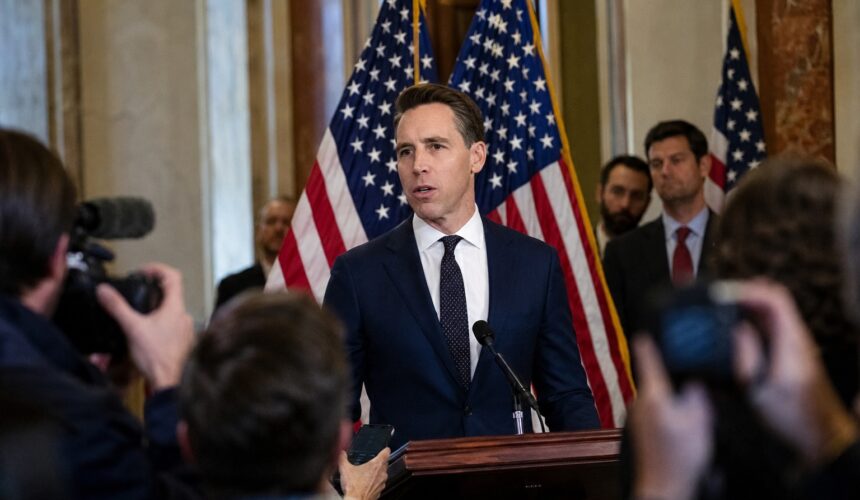
A new bill on Capitol Hill is forcing every member of Congress to take a side on a simple question: should a lawmaker convicted of a felony s*x crime still collect a taxpayer-funded pension for the rest of their life? Right now, the answer under federal law is yes. Senator Josh Hawley of Missouri wants to change that.
Hawley has introduced the No Pensions for Congressional Predators Act, legislation that would block any member of Congress convicted of a felony s*x crime from ever receiving their federal retirement benefits. The proposal closes what supporters describe as a glaring loophole in how Washington handles its own.
The Loophole the Bill Targets
Federal law already strips congressional pensions from lawmakers convicted of certain serious felonies. The list includes bribery, fraud, treason, and perjury – crimes that involve a breach of public trust or an abuse of office. The logic is straightforward: taxpayers should not be required to fund a comfortable retirement for someone who betrayed the office they were elected to hold.
But felony s*x crimes are not on that list. That gap means a member of Congress could be found guilty of s*xual abuse and still walk away with a government-funded retirement check, paid for by the public. For many Americans, that distinction is impossible to defend, and it is exactly the inconsistency Hawley’s bill is designed to eliminate.
What Hawley Is Proposing
Under the No Pensions for Congressional Predators Act, a felony s*x crime conviction would trigger the same pension forfeiture that already applies to bribery and corruption cases. The penalty would attach to the conviction, ensuring that a lawmaker who commits such an offense cannot continue drawing taxpayer dollars after leaving office.
Hawley has framed the measure as a matter of basic accountability. He argues that taxpayers should never be forced to bankroll the retirement of someone who used a position of public trust to commit a serious crime. The senator describes the current loophole as indefensible and says the fix is long overdue.
The bill arrives at a moment of renewed scrutiny over misconduct allegations on Capitol Hill, where questions about how Congress polices its own members have repeatedly surfaced. By tying the penalty directly to a criminal conviction rather than an accusation, the legislation aims to set a clear, enforceable standard that applies equally to every lawmaker.
The Debate It Sets Off
Supporters call the bill a common-sense accountability measure – the kind of proposal that should draw agreement from both parties. The argument is simple: there is no good reason for the public to keep paying a convicted offender, and closing the loophole costs taxpayers nothing.
Critics raise a different concern. Some question whether the bill goes far enough, asking why the penalty should stop at s*x crimes rather than applying broadly to all serious felonies. Others want to be sure the language is precise enough to survive legal challenges and apply only to genuine convictions. Either way, the proposal puts every member of Congress on the record, turning an abstract question of fairness into a concrete vote.
What This Means for Americans
For the average taxpayer, the stakes are direct. Congressional pensions are funded with public money, which means voters are the ones underwriting them. A bill that ensures convicted offenders forfeit those benefits speaks to a widely shared belief that elected officials should be held to the same standards – or higher – than everyone else. As the legislation moves forward, it will test whether Washington is willing to apply that principle to its own ranks.
Stay informed on the stories that matter most. Follow Here’s What Happened on Facebook and bookmark hereswhathappened.news for breaking news and analysis.