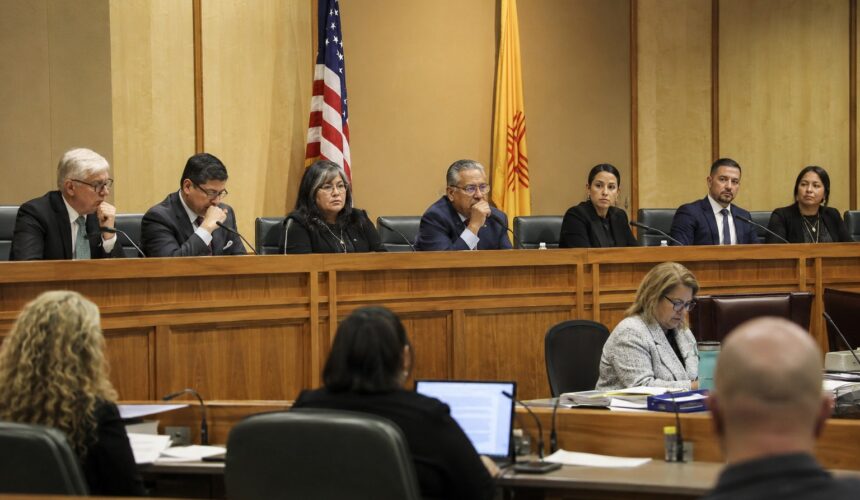
New Mexico lawmakers have handed themselves a tool most state legislatures rarely wield: the power to compel sworn testimony and drag reluctant witnesses into court. And at the very first meeting of the state’s new Epstein “Truth Commission,” they used it, firing off 14 subpoenas to banks, federal agencies, and public officials tied to the late financier’s years in the state.
A Commission With Real Teeth
What sets this effort apart from years of stalled inquiries is the legal muscle behind it. This is not a press conference or a strongly worded letter. The commission, created by the New Mexico Legislature, holds subpoena authority. It can demand documents, compel testimony, and force witnesses to appear if they refuse to cooperate voluntarily. For institutions that have spent years deflecting questions about Jeffrey Epstein, that changes the math entirely.
At its inaugural meeting, the commission approved subpoenas targeting 14 separate entities. The list reads like a roster of every institution that ever brushed up against Epstein’s orbit. It includes the FBI and the New Mexico Department of Justice, both of which have investigated Epstein in the past. It includes major financial institutions, among them Deutsche Bank and JPMorgan Chase, two banks that handled Epstein’s money for years. And it includes the Epstein estate itself, along with the Santa Fe Institute, a nonprofit scientific research organization that Epstein supported financially.
The Focus: Zorro Ranch
At the center of the investigation sits Zorro Ranch, the sprawling property south of Santa Fe where Epstein spent significant stretches of time. The roughly 8,000-acre estate has long been a subject of suspicion, with investigators believing that abuse may have occurred there. For years, that ground went largely unexamined by state authorities. Now lawmakers say they want a full accounting: who knew what, when they knew it, where the money flowed, and which institutions chose to look the other way.
The commission has said it intends to examine potential sexual abuse, trafficking, financial crimes, institutional failures, and the broader power networks that allowed Epstein to operate. By casting subpoenas across banks, federal agencies, and state offices simultaneously, the commission is signaling that it views the Epstein case not as an isolated scandal but as a web of connected failures spanning finance, law enforcement, and public institutions.
Supporters and Skeptics
Supporters describe the commission as the most aggressive Epstein accountability effort anywhere in the country. They argue that years of federal reluctance and sealed records have left victims and the public without answers, and that a state body with subpoena power can finally pry loose information that has stayed locked away. The unusual move of granting a legislative commission the authority to compel testimony underscores how seriously New Mexico lawmakers are treating the matter.
Skeptics raise a different concern. They question whether a state-level commission can realistically force federal agencies like the FBI to hand over records the federal government has guarded for years. Jurisdictional fights are likely, and some of the subpoenaed institutions may resist or challenge the demands in court. Whether the commission’s authority holds up against that pushback remains an open question.
What This Means for Americans
The Epstein case has become a symbol of how wealth and connections can shield the powerful from scrutiny. For many Americans, the frustration has been simple: enormous resources were spent, but full answers never came. New Mexico’s move tests whether a determined state body can succeed where federal efforts stalled. If the commission can actually compel banks and agencies to produce records, it could set a template for how other states pursue accountability when Washington moves slowly or not at all.
For now, the subpoenas are out, and the institutions that received them face a legal deadline to respond. The people and organizations that have spent years deflecting questions now have to answer.
Stay informed on the stories that matter most. Follow Here’s What Happened on Facebook and bookmark hereswhathappened.news for breaking news and analysis.