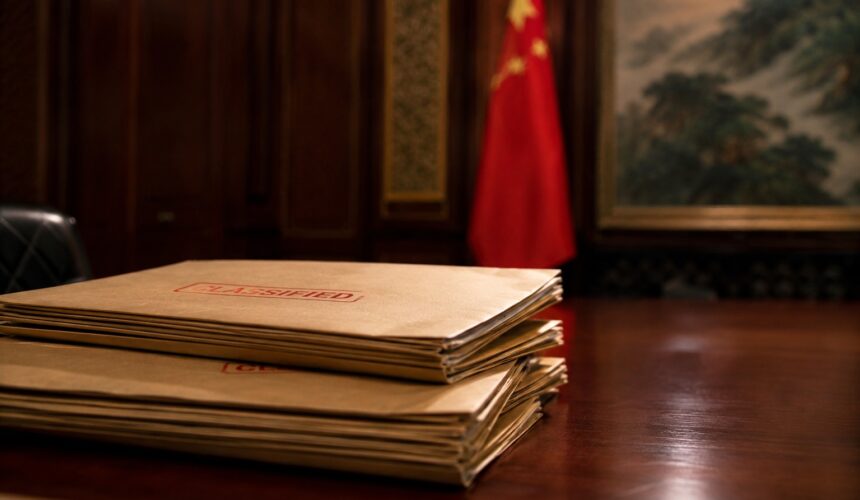
A single offhand comment out of Beijing has reignited one of the most charged stories in American politics. In a recent interview, a Chinese official with ties to government circles suggested that China may be holding a complete, unredacted version of the Jeffrey Epstein files – and hinted that Beijing could one day choose to release the whole thing. No documents were shown. No proof was offered. And no Chinese agency has formally claimed to possess anything at all.
What makes the remark so combustible is not what was said, but what was left unsaid. When pressed directly on whether China actually has the files, the official reportedly kept his answer deliberately vague, suggesting only that the full truth would eventually come out. That ambiguity has been enough to set off a fresh round of speculation across Washington, where the Epstein saga has consumed members of both parties for months.
An Unverified Claim, Not a Confirmed Fact
It is important to be clear about what this is and what it is not. As of now, the assertion is entirely unverified. There is no public evidence that Beijing holds any version of the Epstein files, redacted or otherwise. No official Chinese ministry has issued a statement claiming possession, and no documents have surfaced to back up the suggestion. This remains a claim – provocative, attention-grabbing, and impossible to confirm.
That distinction matters because the Epstein files have already been the subject of intense, fact-checked reporting. The U.S. Justice Department has released millions of pages of Epstein-related records through official channels over the past several months. Some material has been withheld or redacted, typically for reasons tied to victim privacy and ongoing legal proceedings. The notion that a foreign government might quietly hold an uncensored copy is exactly the kind of claim that demands skepticism, not acceptance.
Why the Comment Is Spreading So Fast
The idea has traveled quickly online for a simple reason: it taps into an existing well of public frustration. Many Americans across the political spectrum have demanded full transparency around the Epstein case, and any suggestion that more material exists somewhere – even abroad – lands on fertile ground. The thought that a rival government could be sitting on uncensored documents, and could time their release for maximum political effect, raises obvious national security and diplomatic questions.
Observers who follow Chinese state media note that Epstein-related coverage has been aggressively amplified by Beijing-aligned outlets for months. Skeptics read the latest comment as part of a broader information strategy rather than a genuine disclosure – a way to stoke division in American politics without ever having to produce a single document. Others counter that any claim touching the redacted material deserves a hard look, no matter how unlikely the source or how thin the evidence.
What It Means for Americans
For everyday readers, the practical takeaway is caution. A dramatic claim from an unnamed or loosely identified official, with no documents attached, is not the same thing as a confirmed development. The Epstein story is real and serious, and the demand for transparency is legitimate – but that is precisely why unverified foreign claims should be treated carefully rather than amplified as fact. In an information environment where a single vague comment can travel around the world in hours, the burden of proof still matters.
For now, the situation remains exactly what it appears to be: an unconfirmed assertion that has reignited a debate already gripping both parties. Whether anything ever comes of it is anyone’s guess. But even a hint from Beijing has proven powerful enough to pull the Epstein story back into the spotlight.
Stay informed on the stories that matter most. Follow Here’s What Happened on Facebook and bookmark hereswhathappened.news for breaking news and analysis.